Pt. 2 of 3 / Looking for a Parent, Not a Partner: The Tragic Demands We Place on Love
This is Part 2 of a 3-part series exploring how humanity lost its unconditional baseline, why we seek parents in our partners, and how to stop passing our survival pain to the next generation. [Read Part 1 here].
We tell ourselves we are looking for an equal relationship. We say we want communication, mutual respect, and a true life partner.
But if we look closely at what happens inside us the moment a disagreement starts, a much darker truth comes to light:
Most of us aren't looking for a partner at all. We are looking for a parent whose approval we never have to earn.
We are carrying a deep, unhealed developmental hunger. Having grown up in a world where acceptance was tied to performance, we carry an overwhelming terror of making mistakes, missing the mark, or being seen as inadequate. And subconsciously, we bring that terror directly into our adult relationships.
What a Child Actually Needs vs. What We Demand
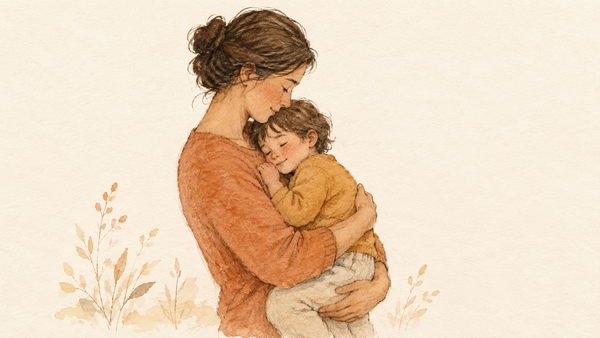
When a child stumbles, fails to meet an expectation, or makes a mess of things due to their natural limitations, they need a specific kind of response from an adult. They need a parent who meets their imperfection with calm understanding, parent who communicates: "You got this totally wrong, but your place in my heart is untouched. You don't have to be perfect to be loved."
When a child experiences that, they learn that mistakes are just feedback, not a threat to their existence. If a toddler strikes their parent, the right reaction is to show hurt, not anger.
But if we never learned that we are "good enough" and safe when we fall short, we enter adulthood terrified of being wrong. We carry an insatiable need for constant, unquestioning approval.
So, when we bring a thought, an action, or a mistake to our partner, we aren't just sharing an idea. Subconsciously, we are asking: "Am I okay? Do you approve of me? Tell me I did well. Tell me I am great as I am."
We demand that our partner act as that ideal, forgiving parent, someone whose sole job is to validate our worth and cushion us from the terror of being inadequate.
The Erasure of the Partner
This is where equal partnership breaks down.
A true, mature relationship consists of two distinct human beings who have different minds, different backgrounds, different boundaries, and completely different ways of looking at a problem. They will naturally disagree. They will see things differently. They will point out when something didn't work.
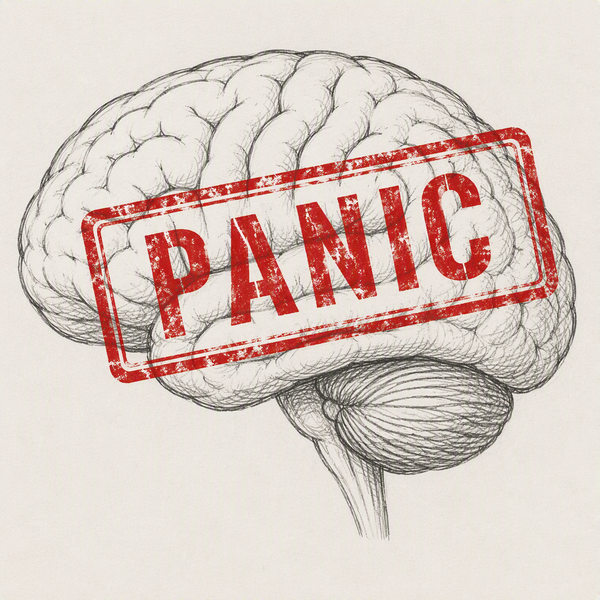
But to a nervous system that is terrified of being inadequate, a partner's differing viewpoint isn't just a difference of opinion. It feels like a parental condemnation.
When your partner says, "I don't agree with how you handled that," or "I see this differently," your survival brain translates it as: "You failed. You are inadequate. You are being rejected."
To protect ourselves from that terrifying feeling, we deploy an impossible demand: We require our partner to drop their own perspective.
We demand that they fall in line, adopt our view, and tell us we are right. We demand that they have no independent voice, or at least never express it if it contradicts ours.
That isn't love, and it isn't partnership. It is holding our partner's autonomy hostage to soothe our own deep fear of missing the mark.
The Asymmetry of the Threat
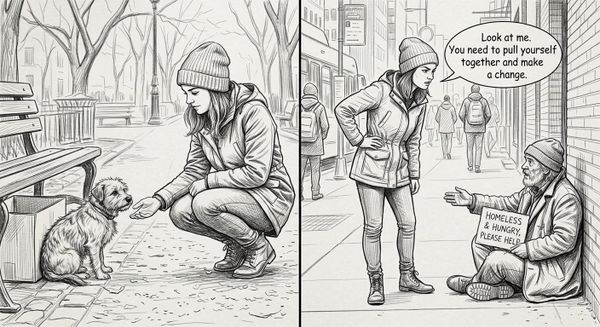
The irony is that while we demand total, unconditional approval from them, we are rarely able to offer it in return.
When our partner makes a mistake, drops the ball, or expresses an opinion that inconveniences us, our own threat system fires up instantly. We criticize them, judge them, or get defensive, doing the exact thing to them that we are terrified of having done to us.
We treat their mistakes as an intolerable flaw, while treating our own mistakes as something that requires immediate, gentle validation.
We end up in an exhausting power struggle where both adults are silently pleading: "Please tell me I'm okay, please don't criticize me, please agree with me so I don't have to feel inadequate or unsafe."
Recognizing the Pattern Without Judgment
It is easy to write about "separating your worth from being right." But for anyone who grew up in an environment where missing an expectation or being misunderstood felt like an existential threat, executing that separation is infinitely easier said than done.
When a survival mechanism is wired into your nervous system before you even have words for it, a simple disagreement from your partner doesn't register as a mere difference of opinion. It registers as a drop in the floorboards. It feels like life-threatening danger. You cannot simply willpower or "mindset-shift" your way out of a bodily threat response that was sculpted in early childhood.
This isn’t about setting a goal to "heal" this dynamic overnight or suddenly becoming a perfectly detached, enlightened partner.
It is simply about recognizing the pattern when it happens.
It is about noticing that quiet, desperate panic in your chest when your partner sees things differently, and recognizing what it actually is: This isn't about the current argument. This is the child in me, terrified of being seen as inadequate, still searching for that baseline of unconditional parental approval.
And just as importantly, it is about extending that exact same recognition to your partner when they snap, get defensive, or demand that you agree with them. They aren't trying to control you for the fun of it...their nervous system is frantically reaching for the exact same safety net they missed out on as a child.
Neither of you is broken or malicious for having this hunger. You are two human beings who missed out on an unconditional baseline, trying to navigate a world that taught you safety and acceptance are conditioned on how others perceive you.
We don't need to judge ourselves or our partners for carrying this survival pain into adulthood. Simply seeing the pattern for what it is, without turning it into another thing we have to "fix" immediately, is where the noise begins to quiet down.
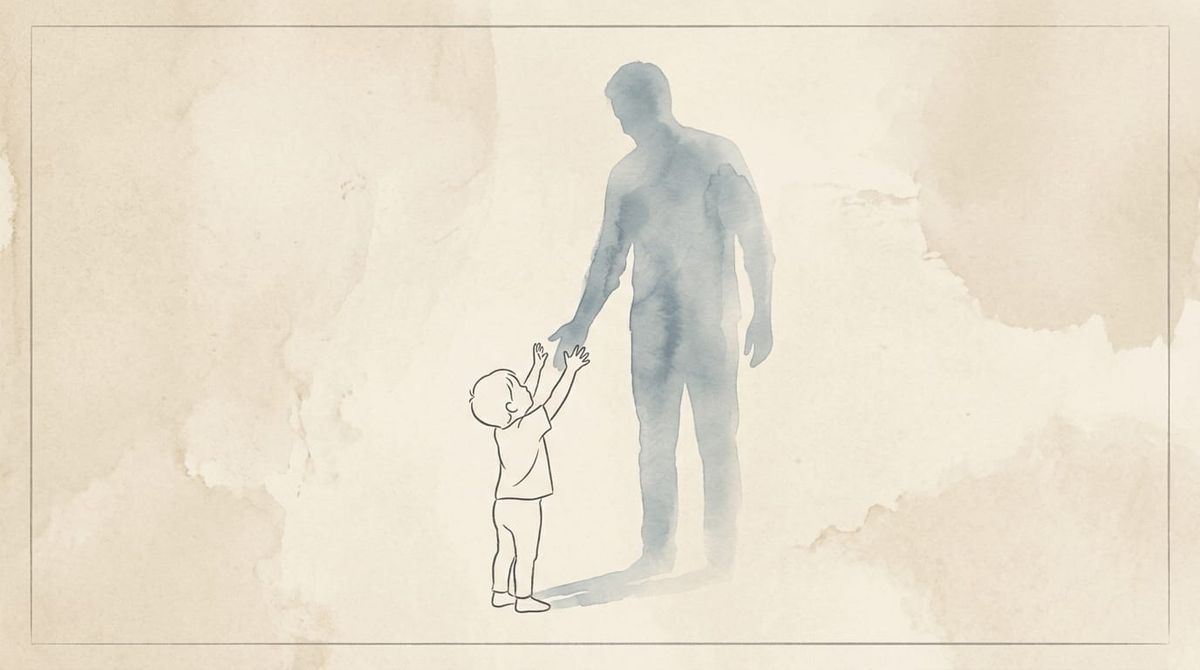
When we stop judging the panic, we can finally begin to see each other clearly: not as invincible giants who failed to protect us, but as two equals who are both just trying to find a way to be safe.