The Evolutionary Mismatch of Parental Expectations

How "you should know better" parenting forces children into survival mode.
Note: This is not a critique aimed at blaming individual parents, but rather an examination of widespread, socially accepted parenting practices and systemic cultural pressures.
The Foundations of Safety and Trust
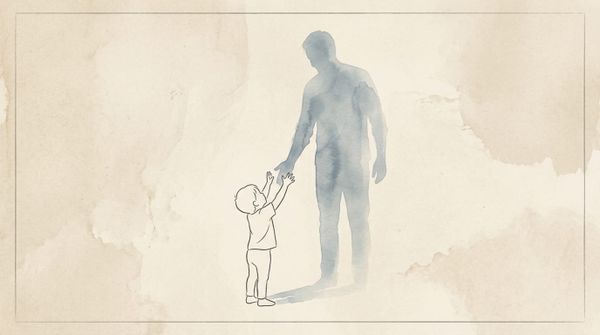
For a human child, group acceptance is not a social preference, it is a biological necessity for survival. In the early years of life, a child’s sense of safety is constructed entirely through their environment. It is built through continuous safe attachment, co-regulation, and unconditional acceptance from primary caregivers, regardless of their behavior.
Before a child can navigate adult standards, rules, or societal expectations, they first need to experience the foundational safety of being accepted as they are: a developing human with age-appropriate capabilities and limitations (especially limitations).
When caregivers demand behavior, knowledge, or emotional maturity that exceeds a child's developmental stage...and pair those demands with emotional withdrawal, criticism, or punishment, the child cannot integrate the experience as a constructive learning moment. Instead, they internalize a devastating core message: "Because I didn't know better and cannot understand where I went wrong, I am not right as I am. I am not good enough as I am. I am not accepted as I am. I am not safe as I am."
Disorganized Expectations & Systemic Mismatches
Trust relies on consistency. When parental reactions are unpredictable or disorganized, a child’s ability to build a stable concept of safety is undermined. Often, this is not due to a lack of parental love, but a collision between adult societal demands and a child's raw neurobiology.
Consider a common scenario: A toddler experiences warmth and close attachment at 7:00 AM. An hour later at daycare drop-off, distress takes over, and the child cries desperately for their parent. Trapped between the rigid pressure of workplace punctuality and outdated parenting advice that suggests a quick exit is best, the parent looks stressed, turns, and walks away.
To the adult, this is a necessary daily compromise. To a toddler whose brain cannot yet conceptualize time, employment, or abstract promises, the experience is immediate and severe: The person who represents my safety walked away while I was in distress. When verbal assurances of love conflict with repeated experiences of sudden separation during high arousal, the child learns to distrust words and rely solely on immediate threat signals.
"You Should Have Known Better": The Implicit Message
Phrases commonly used in moments of parental frustration carry heavy emotional weight for a child who acted entirely within their developmental limits:
- "You should have known better."
- "Why did you do that?"
- "Explain yourself."
When delivered with disappointment or followed by isolation, these statements communicate a devastating implicit message to a developing mind:
"You have failed. Your natural state is inadequate. To secure love and safety, you must suppress who you are and perform like an adult. When you act according to your actual developmental level (which is the best you obviuosly can), protection is conditional and love will be withdrawn."
When a child is threatened with the loss of attachment for failing to meet standards they physically and neurologically cannot meet or understand, the nervous system adapts to survive.
Long-Term Developmental & Relational Impacts
When survival becomes contingent on hyper-vigilance, early attachment disruption manifests in specific lasting behavioral patterns throughout childhood, adolescence, and beyond:
- Perfectionism as a Defense Mechanism: Because external standards feel unpredictable and dangerous, zero-defect perfectionism becomes a baseline strategy to prevent perceived rejection or failure.
- The Freeze Response & Chronic Anxiety: The mere possibility of a negative consequence or minor disappointment from authority figures or peers can trigger an immediate freeze response or acute panic.
- Rejection Sensitivity & Hyper-Vigilance: Minor shifts in someone's tone, facial expression, or mood are registered not as a bad mood, but as existential threats.
- Deep Distrust & Bias Toward Threat: Once trust is fractured early through disorganized caregiving (or outright abuse), the mind develops a persistent cognitive bias toward expecting abandonment...and, on a primal level, potential death. Even consistent, positive reassurance from others can be extremely difficult to integrate because the underlying nervous system remains wired for distrust and self-protection.
Shifting the Paradigm
Children do not need pre-emptive discipline for capacities they have not yet developed; they need regulation, patience, and dependable structure. Replacing "you should have known better" with emotional co-regulation and understanding of their limits allows children to learn without sacrificing their fundamental sense of safety.